Borosilicate Glass Tube: Properties, Applications and Buying Guide
Borosilicate Glass Tube: Properties, Applications and Buying Guide
A practical guide to borosilicate 3.3 glass tube and borosilicate 3.3 glass tubing
What Is Borosilicate Glass Tube?
Borosilicate glass tube is a technical glass tubing made with a borosilicate composition and a coefficient of expansion (COE) of approximately 3.3 × 10⁻⁶/K. For industrial and laboratory applications, it is commonly specified as borosilicate 3.3 glass tube, borosilicate 3.3 glass tubing and borosilicate glass tubing.
Compared with ordinary soda-lime glass, borosilicate 3.3 offers better thermal-shock resistance and chemical durability. It is therefore suitable where glass tubing must handle temperature changes, chemicals, pressure-related observation, or repeated cleaning.
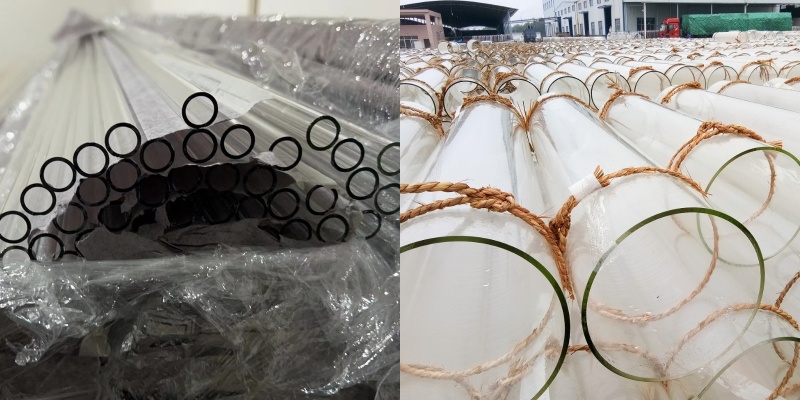
Key Properties
Property | Why It Matters |
COE 3.3 | Low thermal expansion helps reduce stress during temperature changes. |
Thermal-shock resistance | Suitable for applications involving heating and cooling cycles. |
Chemical resistance | Works well with many laboratory and chemical media. |
Optical clarity | Allows easy observation of liquids, gases and processes. |
Custom processing | Can be cut, fire-polished, formed, ground or otherwise machined as required. |
Physical Data
1 | Coefficient of mean linear thermal expansion (20℃~300℃) | 3.3 | 10-6K-1 |
2 | Density | 2.23 | g/cm3 |
3 | Transformation temperature | 525 | °C |
4 | Annealing Point | 560 | °C |
5 | Softening Point | 820 | °C |
6 | Working Point | 1250 | °C |
Main Chemical Composition
SiO2 | 81% |
Al2O3 | 2% |
Na2O & K2O | 4% |
B2O3 | 13% |
Common Applications
· Laboratory equipment and glassware
· Chemical and pharmaceutical equipment
· Sight glass and level-indicator components
· Industrial observation and process-control equipment
· Lighting and electrical components
· Heating and high-temperature equipment
· Sensors, analytical instruments and customized glass assemblies
Choosing the Right Borosilicate 3.3 Glass Tubing
Before ordering, confirm the outside diameter (OD), inside diameter (ID), wall thickness, length and dimensional tolerances. For precision applications, ID/OD tolerance and concentricity can be more important than nominal size.
The end finish also matters. Depending on the application, tubing may require cut ends, fire-polished ends, rounded edges, formed ends, holes or other secondary processing. If the tube will be exposed to rapid temperature changes, chemicals or pressure, specify the actual operating conditions rather than selecting by temperature alone.
Why Work With a Manufacturer?
Buying directly from a glass manufacturer can make it easier to control dimensions, material grade, processing and packaging, especially for OEM projects or repeat orders. Samples can also be checked before moving to larger production quantities.
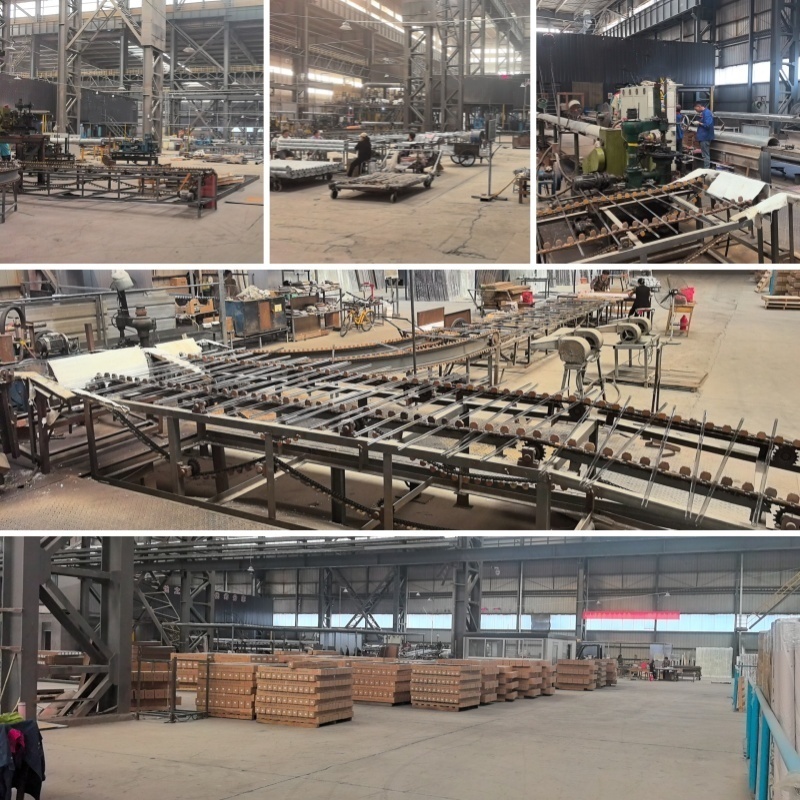
Borosilicate Glass Tube from Jinan JSV Industrial Co., Ltd.
Jinan JSV Industrial Co., Ltd. supplies borosilicate 3.3 glass tube and borosilicate 3.3 glass tubing for laboratory, lighting, industrial and customized applications. Different dimensions and further processing can be discussed according to the customer's drawings or technical requirements.
Need borosilicate 3.3 glass tube for your project?
Contact Jinan JSV Industrial Co., Ltd. with your required OD, ID, wall thickness, length, tolerance and application. We can discuss a suitable borosilicate 3.3 glass tubing solution.